The Independent Media Commission received a complaint from Access Bank on 10th June 2026 against New Numbered Newspaper regarding its publication of Wednesday, 10th June 2026, titled: “What A Mess! Access Bank A Good for Nothing Bank?”
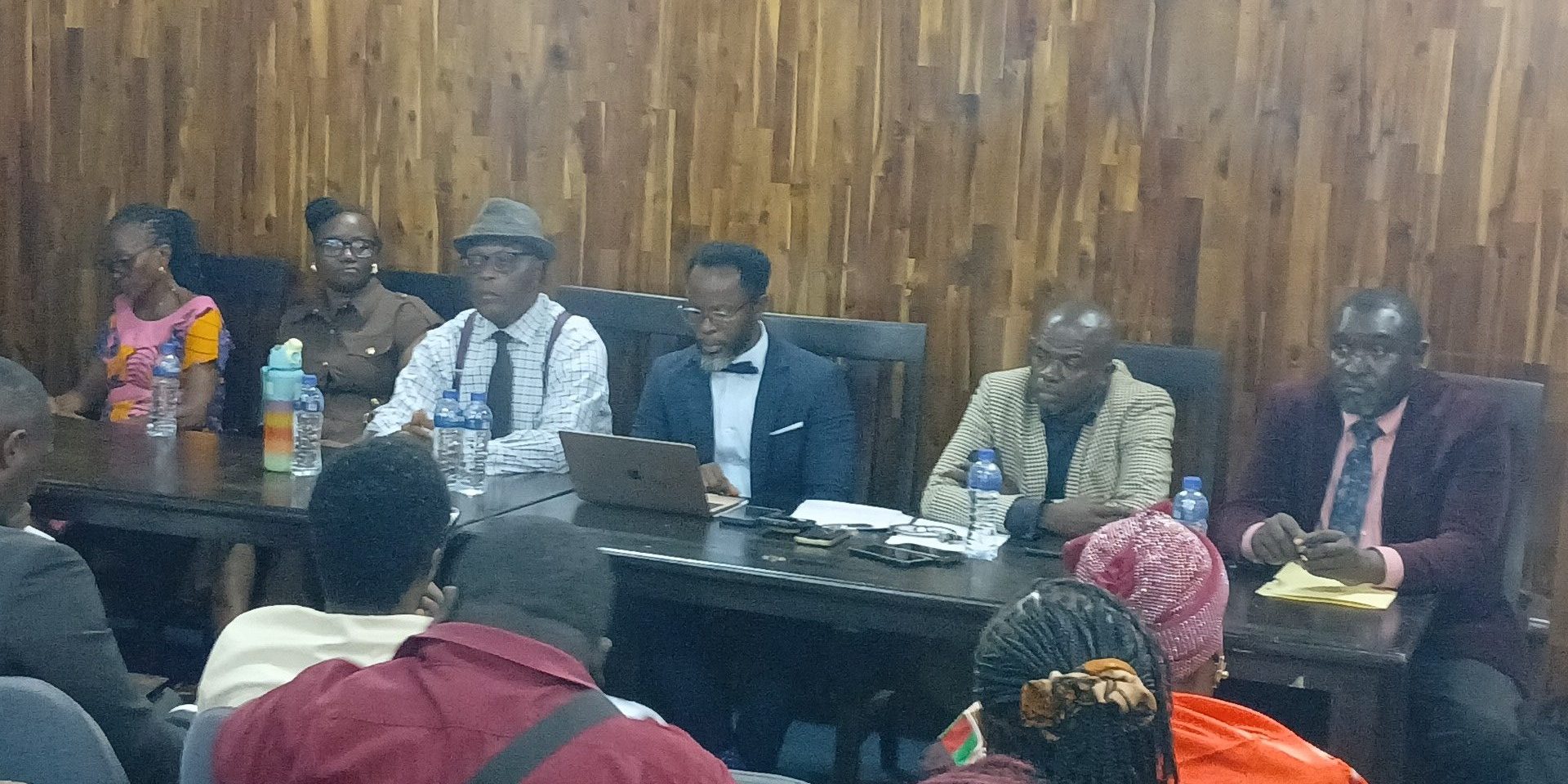
The Commission conducted two hearing sessions on the matter. The first hearing was held on 7th July 2026, while the second hearing took place on 14th July 2026.
Complainant’s Case
During the first hearing on 7th July 2026, Mr. Allycious Kelvin Kamara, Internal Auditor of Access Bank, restated the complaint in the presence of Mr. Arthur Caulker, Managing Editor of New Numbered Newspaper.
Mr. Kamara submitted that Access Bank was dissatisfied with the publication because the headline was sensational, malicious, defamatory and highly irresponsible. According to him, the publication contained three serious allegations, namely:
- That staff of the Bank leave customers unattended during lunch hours.
- That the Bank takes more than five days to clear customers’ cheques.
- That customers have to bribe Bank staff in order to receive services.
He maintained that these allegations were false and intended to destroy the reputation of Access Bank. He described the publication as false, inflammatory, misleading, reckless, malicious and inconsistent with the ethical and professional standards expected of media institutions.
On the issue of Staff Leaving Customers Unattended, Mr. Kamara rejected the allegation that customers are abandoned during lunch hours. He explained that the Bank always ensures adequate staff coverage in every department, such that whenever one staff member proceeds for lunch, another staff member is available to provide services.
Also, on the allegation of Delay in Processing Cheques, stating that the Bank takes more than five days to process cheques, Mr. Kamara explained that cheque clearance normally takes three days. He said that once a cheque is deposited, it is scanned electronically. Where a cheque fails to scan, the Bank requests a direct credit from the issuing bank.
According to him, the cheque referred to in the publication originated from the Bank of Sierra Leone through the Active DS platform. Since the cheque failed to scan, Access Bank requested direct credit from the Bank of Sierra Leone. He explained that the Bank of Sierra Leone processed the direct credit within three days and Access Bank credited the customer’s account on the fourth day. He therefore maintained that it was incorrect to state that Access Bank requires more than five days to process a cheque.
On the Allegation of Bribery, Mr. Kamara denied the allegation that customers are required to bribe Bank staff before receiving services, describing the allegation as completely false.
Mr. Kamara further submitted that the publication was deliberately intended to expose Access Bank to public hatred, ridicule, scandal and contempt, while undermining public confidence in the Bank among customers, shareholders, regulators, business partners and the general public.
He further informed the Committee that New Numbered Newspaper published the story without first contacting the Bank to obtain its side of the story, thereby violating the principles of responsible journalism.
He concluded by stating that although Access Bank supports freedom of the press, such freedom must always be exercised responsibly, professionally and within the confines of the law.
He noted that Access Bank requested the Commission to order that the New Numbered Newspaper immediately retract the publication with due prominence; New Numbered Newspaper publish an unqualified public apology with the same prominence as the offending publication; New Numbered Newspaper desist from publishing further defamatory, malicious and unverified reports against Access Bank; and appropriate sanctions and disciplinary measures be imposed on New Numbered Newspaper.
Respondent’s Case
Responding to the complaint, Mr. Arthur Caulker, Managing Editor of New Numbered Newspaper, stated that he stood by the publication. He denied publishing the article out of malice, explaining that he regarded Access Bank as a friendly institution and had maintained cordial relations with both the Managing Director and the Corporate Department over the years.
He further stated that before publication, he informed his Editor about the story. After drafting the article, it was reviewed by the Editor and subsequently confirmed before publication.
Mr. Caulker explained that for approximately four months he had been receiving complaints from members of the public regarding the operations of Access Bank. Although he initially did not publish the allegations, he eventually decided to do so after personally experiencing similar difficulties while conducting banking transactions.
He stated that he deposited a cheque at the Charlotte Street Branch of Access Bank on a Monday and expected the funds to be credited within three days. When he visited the Bank on Wednesday to withdraw money, he was informed that the cheque had not yet been processed.
According to him, a female staff member informed him that the cheque had not yet been credited. He therefore requested to see the Legal Officer of the bank but was informed that he was absent. He said he then met the Branch Manager, who confirmed that the cheque had not yet reflected in his account. Mr. Caulker stated that the Branch Manager informed him that cheques from the Bank of Sierra Leone normally take between four and five days to process. He explained that he later contacted the Public Relations Department of the Bank of Sierra Leone, where he spoke with Mr. Soko, who referred him to Mr. John.
According to Mr. Caulker, Mr. John informed him that the Bank of Sierra Leone had already processed the cheque and issued him with the relevant returns. He stated that when he presented the returns to Access Bank, he was informed that the Bank had still not received the funds. Mr. Caulker further alleged that while he continued waiting, the Branch Manager proceeded for lunch and he was subsequently asked by a Security Officer to wait outside the banking hall.
He stated that it was after 6:00 p.m. that a female staff member informed him that the funds had finally been credited to his account. When he requested to withdraw Le5,000, the Branch Manager informed him that banking hours had officially closed and withdrawals could no longer be processed. Mr. Caulker told the Committee that the Branch Manager then offered him Le3,000 from his personal funds.
He stated that a Security Officer accompanied him to collect his cheque book from another location, after which he wrote a cheque for Le3,000 and received the money from the Branch Manager at the Post Office outside official banking hours.
At the conclusion of the first hearing, the Committee requested Access Bank to produce the Branch Manager who allegedly advanced the Le3,000 to Mr. Caulker from his personal funds.
The second hearing was held on 14th July 2026, during which the Branch Manager, Mr. Stanley, testified via WhatsApp.
Mr. Stanley confirmed that he personally advanced Le3,000 to Mr. Caulker because, by the time the funds were credited to his account, official banking hours had ended and he could no longer withdraw cash. He explained that Mr. Caulker informed him that he urgently needed money to travel to the provinces for a funeral during the weekend.
According to Mr. Stanley, he sympathized with Mr. Caulker’s situation and, out of goodwill, decided to advance him the money from his personal funds.
Committee’s Findings
Having carefully considered the evidence presented by both parties, the Committee made the following findings:
- The Committee found that Mr. Arthur Caulker was not candid in parts of his testimony and appeared to harbour personal malice against Access Bank.
- The Committee found that the allegations contained in the publication were not substantiated by sufficient evidence.
- The Committee concluded that the publication was motivated largely by Mr. Caulker’s personal experience rather than objective and balanced reporting.
- The Committee found that the article was inaccurate and failed to comply with the basic journalistic requirement of seeking the views of the affected party before publication.
- The Committee noted that New Numbered Newspaper had already published an apology on its front page ahead of the ruling.
Ruling:
The Independent Media Commission at its meeting held on 27th July 2026, ratified the recommendation of the Complaints Committee in line with Section 19(6) of the IMC Act 2020, as follows:
- New Numbered Newspaper shall publish a full retraction of the offending publication with the same prominence as the original article in its next edition immediately upon receipt of this ruling.
- New Numbered Newspaper shall publish a public apology to Access Bank with the same prominence as the offending publication in its next edition immediately upon receipt of this ruling.
- New Numbered Newspaper is reminded to adhere to the principles of accuracy, fairness, balance and verification in all future publications by ensuring that persons or institutions against whom allegations are made are given an opportunity to respond before publication.
- The Newspaper is further cautioned that any future breach of the IMC Act and the IMC Print and Electronic Media Regulations may attract the appropriate sanctions provided under the law.